2026-01-19 541词 中等

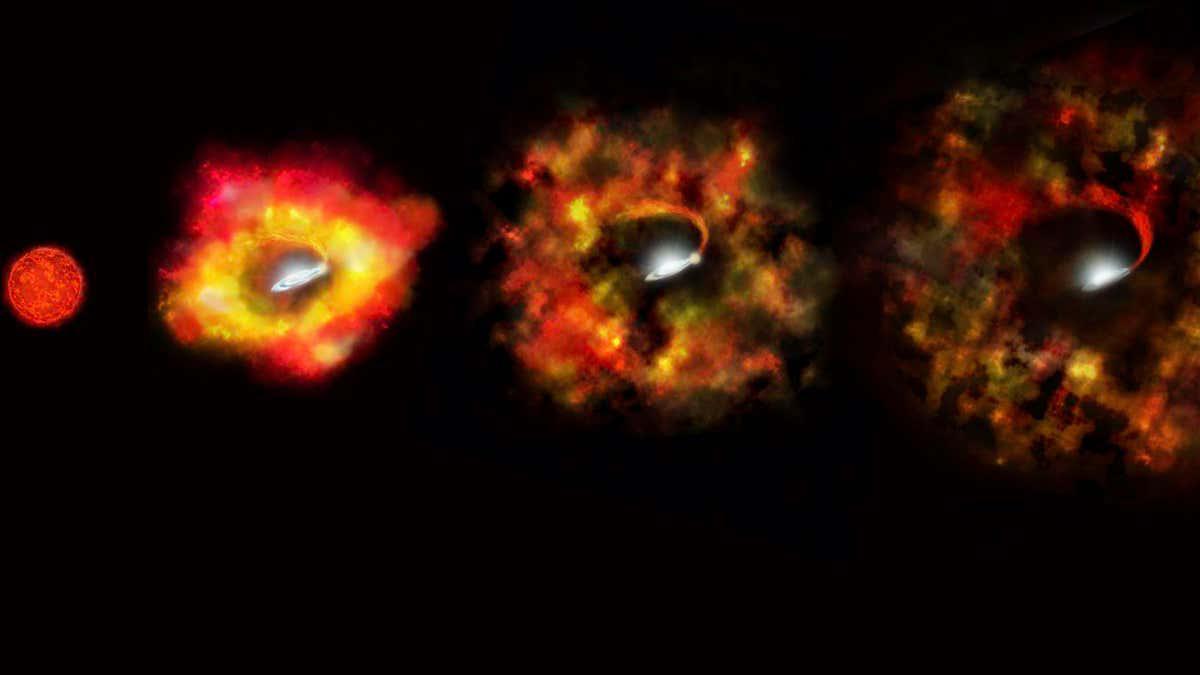
In 2024, Kishalay De at Columbia University in New York and his colleagues observed an unusually bright star called M31-2014-DS1 in the nearby galaxy Andromeda that was around 20 times as massive as our sun. The star appeared to grow briefly brighter in 2014, before becoming dramatically dimmer between 2017 and 2020. De and his colleagues thought this pattern of brightening and then fading matched predictions for a failed supernova producing a black hole, but there was no sign of the black hole itself, such as tell-tale X-ray radiation.
免责声明:本文来自网络公开资料,仅供学习交流,其观点和倾向不代表本站立场。