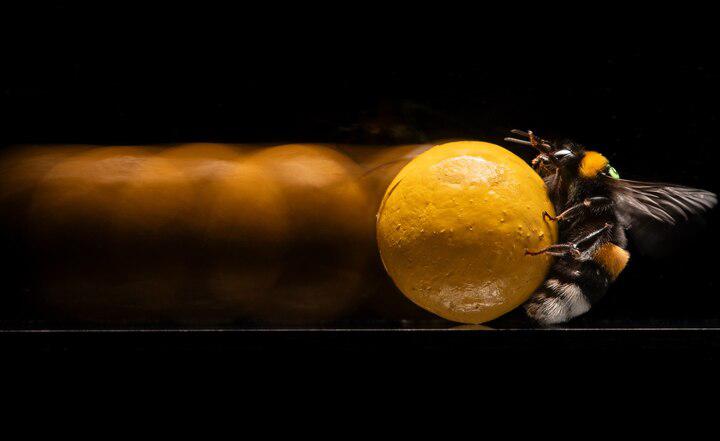
A bumblebee rolls a ball toward a “flower” target in a lab at the University of Oulu in Finland. Researchers there are exploring whether bees are capable of light-bulb moments when faced with a new challenge.
2026-03-26 2947词 晦涩

That’s sadly uncommon these days. Bees around the globe have been dying off in massive numbers, suffering an onslaught of woes: parasites, pathogens, pesticides, dwindling habitat. We’ve learned of these declines mostly from honeybees, whose lives are intertwined with human agriculture because beekeepers haul millions of hives to pollinate everything from almonds to apples, as well as dozens of other fruits and vegetables. Along with the 20,000-plus other bee species, they help pollinate roughly a third of the planet’s food supply and ensure the reproduction of more than three-quarters of all flowering plants. While we know less about wild bees, population surveys indicate that bees worldwide are in decline, from solitary species like leaf-cutter bees that nest alone and pollinate a few preferred plants to social ones like native bumblebees that live in colonies and collect nectar and pollen from nearly any flower they encounter.
免责声明:本文来自网络公开资料,仅供学习交流,其观点和倾向不代表本站立场。