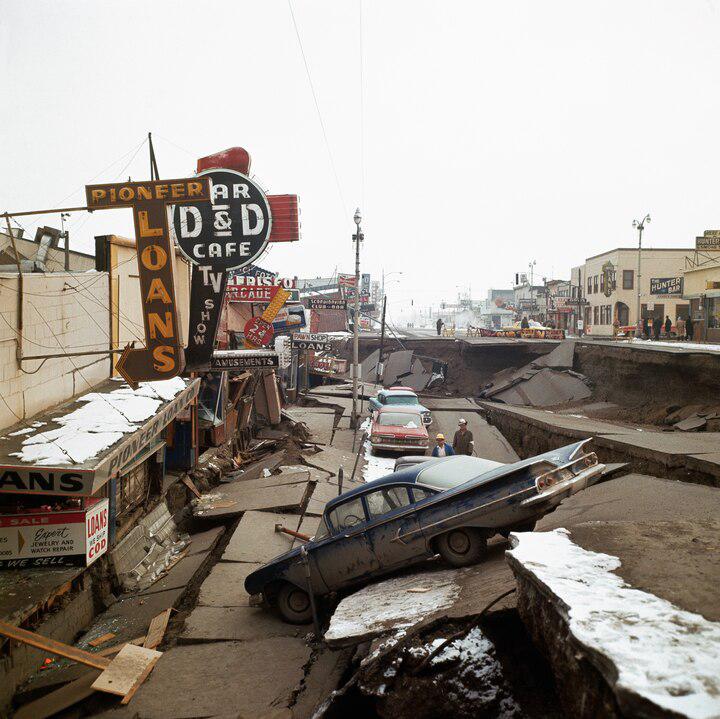
The Great Alaska Earthquake rocked Anchorage in 1964 and triggered tsunamis along the pacific northwest coast. Researchers suspect that these waves may have brought a dangerous fungus ashore on Vancouver Island, which infected humans decades later.
2025-12-04 1767词 晦涩

Engelthaler and his fellow investigator, microbiologist and immunologist Arturo Casadevall, delved into genetics, shipping records, and soil samples. And the answer they found astounded them. As it turns out, the same strain of C. gattii had been present in Brazil over a century earlier. From there, it likely hitched a ride north in the ballast water of cargo ships after the Panama Canal opened in 1914. The ships dumped their water around Vancouver Island, where the fungus lived harmlessly off the coast for decades. Then, the Great Alaska Earthquake struck in 1964, triggering tsunamis along the Pacific Northwest coast—moving C. gattii onto land and allowing it to colonize the entire coastline at the same time, as soil samples suggested. It took 30 years for the fungus to fully adapt to life on land and grow ever more virulent. Then, it started killing.
免责声明:本文来自网络公开资料,仅供学习交流,其观点和倾向不代表本站立场。